

The process of licensing Mr. Yoshimura, the inventor of Tupro, and Dr. Suyoto Rais, the recipient of the Tupro licence
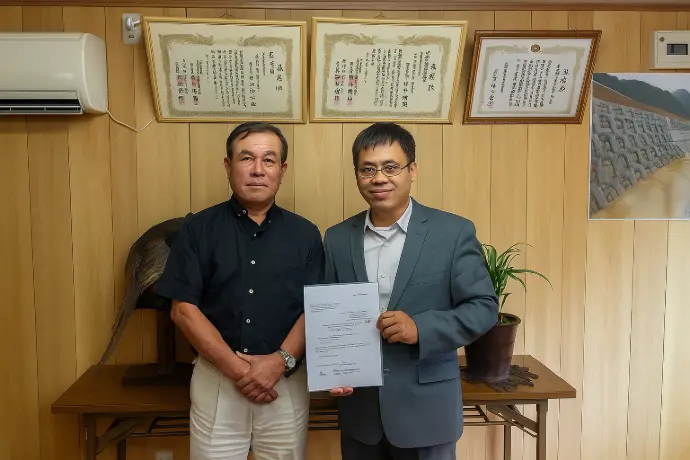
The handover of the Tupro license from Mr. Yoshimura, the inventor of Tupro, to Dr. Suyoto Rais, the official license holder of Tupro in Indonesia

Dr. Ir. Makmur Solahudin, M.Eng. & Solihin, S.E., M.Pd., M.M.
Developers of TUPRO in Indonesia
Since 2017, this technology has been transferred, 100% produced and developed in Indonesia. This is in line with the Government's programme to encourage the transfer of technology from abroad to Indonesia, particularly in the field of national infrastructure.
WHY TUPRO?
TUPRO is necessary to prevent landslides because TUPRO (Progressive Retaining Wall) offers a robust and environmentally friendly soil retention solution with the advantage of a unique installation method. This method uses a configuration of natural stones and interlocking concrete blocks, rather than being rigidly bound, making the structure more stable and effective in withstanding soil pressure while maintaining groundwater pressure balance..
The importance of TUPRO
- Disaster prevention: TUPRO is used to address the potential hazard of landslides in vulnerable areas, such as in hydropower projects, toll roads, hilly roadside areas, and industrial zones.
- Structural advantages:
- - Stability: The installation of natural stone using the "ishizumi" method (similar to Japanese stone stacking) and interlocking concrete blocks makes the structure stable and not easily dislodged.
- - Drainage system: The gaps and pores in the arrangement of stones help distribute groundwater, maintaining a balance between active and passive pressure, so that the retaining walls are not easily damaged by water pressure.
- Alternative solutions: TUPRO has become the primary choice in many projects because it can function more effectively and last longer compared to other less effective methods.
- Environmental impact: The use of natural stone as the main construction material makes TUPRO more environmentally friendly because stone does not decay over time.
